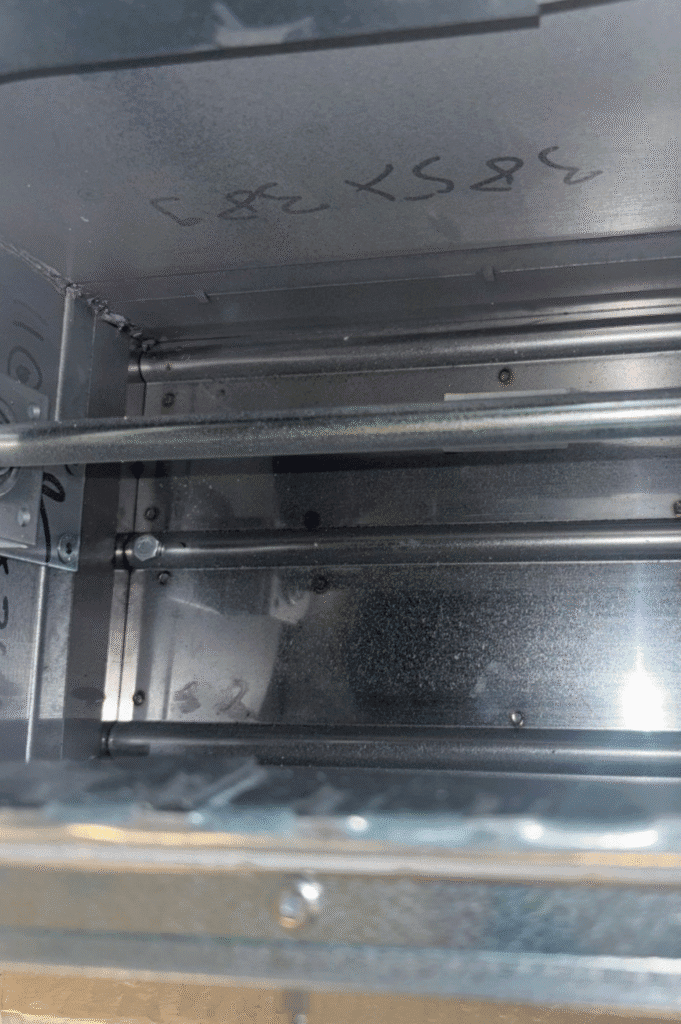
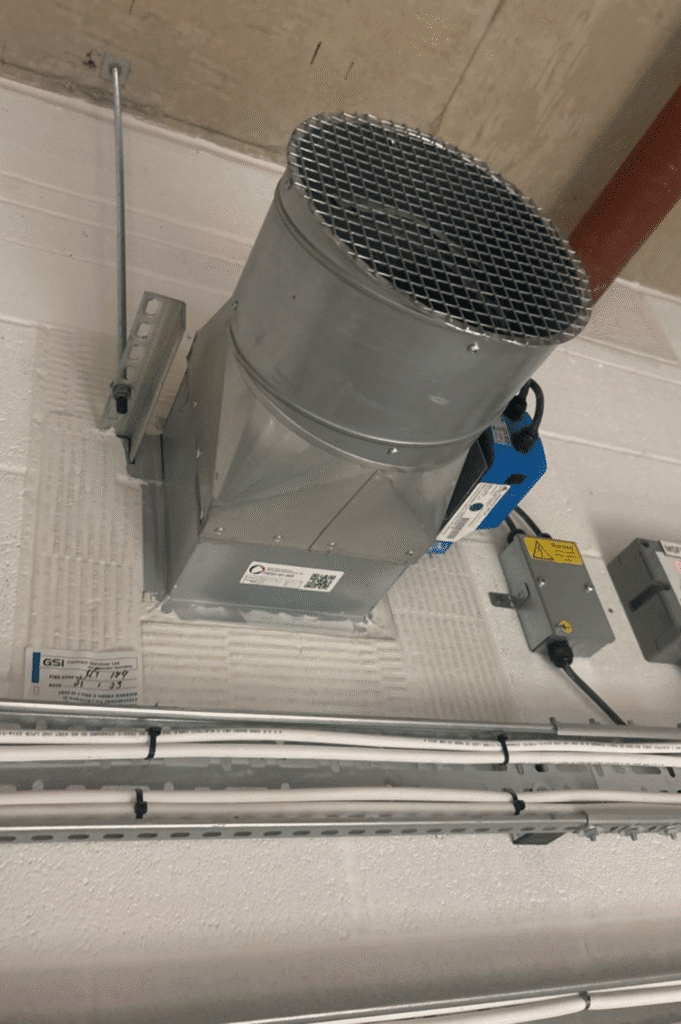
The difference between Fire and Smoke Dampers can be overlooked. This is a common point of confusion for facilities and building managers who need specialist input from contractors like Delta. Our smoke control team are here to serve your team, ensuring safety for your staff and your building.
Properly specifying, maintaining, and testing fire and smoke dampers is a core responsibility for any Facilities Manager under the Regulatory Reform (Fire Safety) Order 2005. While they may look similar to the untrained eye, confusing fire and smoke dampers can lead to catastrophic system failure during an emergency. The distinction impacts everything from your capital expenditure and system design to your ongoing Planned Preventive Maintenance (PPM) schedule and compliance reporting.
Detailed Comparison of Fire and Smoke Dampers for Facilities Managers
| Feature | Fire Damper | Smoke Damper |
| Primary Purpose | To maintain the integrity of a fire compartment (wall/floor). It stops fire from spreading through ducts. | To control the movement of smoke within a building. It is part of a pressurisation or smoke control system. |
| Activation Method | Heat. Typically, a fusible link that melts at a set temperature (e.g., 72°C), causing the damper to slam shut. | Signal. Activated by a smoke detector or a central fire alarm panel, which signals a motor or actuator to close. |
| Location | Installed in fire-rated barriers like walls, floors, and partitions where ductwork penetrates. | Installed within the ductwork of HVAC or smoke control systems, often not in a rated barrier. |
| Testing Method | Mechanical Drop Test. Manually releasing the fusible link to ensure it closes and latches. | Functional Operation Test. Sending a signal from the panel to verify it closes fully and reports its status correctly. |
| Key Standard | BS EN 1366-2: Fire resistance tests for service installations – Fire dampers | BS EN 1366-10: Fire resistance tests for service installations – Smoke control dampers |
Why the difference between fire and smoke dampers matters
Understanding the difference means that they can be deployed correctly the first time, saving time, money, and providing essential life safety systems.
Different Systems, Different Risks: Using the wrong type can render a life safety system ineffective. A fire damper won’t help control smoke in an atrium, and a smoke damper won’t stop a fire from spreading through a wall.
Maintenance & Compliance: They have different testing requirements under standards like BS 9999. Fire dampers need a mechanical drop test, while smoke dampers need a functional operational test. Your PPM schedule must account for both.
The Hybrid Option: There are also Combination Fire Smoke Dampers (CFSDs), which are designed to do both jobs—they close upon a heat signal (fire) and upon a signal from a detector (smoke). These are common in complex modern buildings.
In short: Think of fire dampers as passive, heat-activated “fire doors” inside your ducts. Think of smoke dampers as active, electronically-controlled “smoke gates” within your ventilation system.
The Compliance Consequences of Confusing Fire and Smoke Dampers
The risks of getting it wrong extend beyond safety. From a compliance perspective, incorrectly maintaining your fire and smoke dampers can invalidate your building’s fire strategy and leave you, as the ‘Responsible Person,’ legally exposed. During an audit or insurance assessment, you must be able to demonstrate that each damper has been tested according to its specific standard. A generic “damper test” will not suffice. Your maintenance records must clearly show that fire dampers underwent a mechanical test and smoke dampers underwent a functional operational test, as mandated by BS 9999 and the ASFP Yellow Book.
Creating a Compliant Maintenance Strategy for Fire and Smoke Dampers
The first step is a professional survey to identify every damper in your building accurately.
This register becomes the backbone of your compliant PPM schedule. For fire dampers, you will need a SCQF Level 5 certified technician to perform the required mechanical drop test.
For smoke dampers, we interface with your Building Management System (BMS) or fire panel to execute and verify the functional test. This rigorous, differentiated approach ensures the ongoing integrity of both your fire and smoke dampers, providing you with the certified documentation needed for your safety file.
Partner with a Specialist in Smoke Damper Compliance
Navigating the complexities of fire and smoke dampers requires a partner with certified expertise. Delta Smoke Control provides this assurance for smoke Dampers. Don’t leave compliance to chance.
Contact Delta Smoke Control today for a certified survey of your smoke dampers and a comprehensive maintenance plan that ensures full compliance.
Book a complimentary consultation